It’s Time To Rethink the Computer
With MacBook Neo joining the lineup, there’s no better time to stop thinking about the computer as just the chip inside. It's time to start thinking of the whole package.

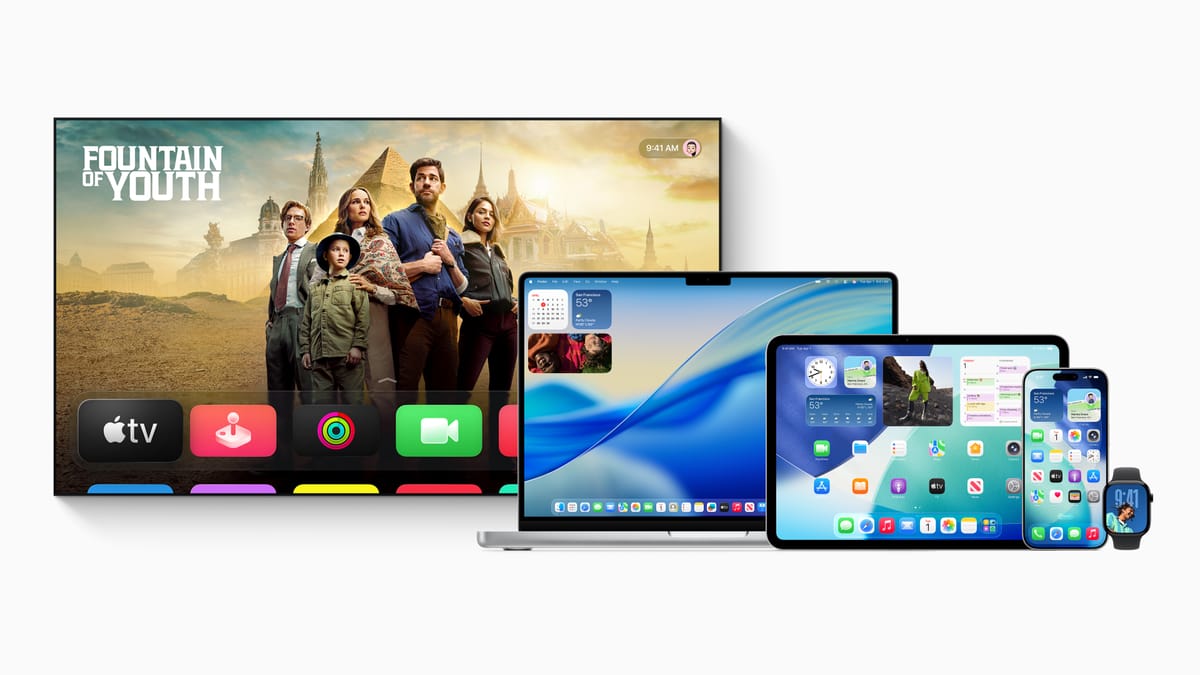
For the longest time, people have been dinging iPad Pro for having a powerful chip with no way to use it. They talk about how the computer has the same chip as the Mac but how it’s nowhere near as capable as a Mac. While an iPad can’t run Xcode or use Final Cut plugins or anything like that, saying an iPad is not capable is just plain foolish, but I do think there are some reasons that people keep trying to push the iPad into that space.
The End of the Intel Era
Back in 2016, we got the last iteration of MacBook Pro to be built on an Intel chip and this was a particularly dark era for the Mac. Effectively what happened at the time is that Apple was promised a particular set of specs with regards to power and heat and Intel just completely missed the mark, getting stuck for almost half a decade with inefficient, slow, hot chips.
With devices like the 12” MacBook and the redesigned MacBook Air, they were just simply too thin for the chips that Apple had at their disposal. The computers were slow, had bad battery life, and ran really hot, often spinning up the fans (if they had fans) to the point where they were pretty loud almost all the time. I had a 2019 16” MacBook Pro, I remember the days of hot computers with bad battery life.
What People Did About It
So with the Mac basically falling apart at this point, people were confused as to what the next step was for Apple. At the same time that these Macs started to lag, iPads started to get really good.
With their more efficient chips, iPads were able to run without fans, they stayed cool when you were using them, and they had a battery life that actually ended up being almost double Macs in some cases (there were times I would have to use my iPad instead of my Mac in college because I knew it wasn’t going to last).
The iPad Became More Capable
During this time, Apple was also pushing the iPad to become a more capable machine. They started experimenting with multitasking, keyboards, mouse support, and more. Because people were looking for a solution to the crappy Mac situation, they started to see the iPad as the successor to the Mac, hoping something thin, light, with great battery life, and a powerful chip would take its place.
The Apple Silicon Transition
It was one WWDC right at the start of the COVID pandemic lockdowns that Apple finally announced a solution for the Mac: M1. M1 was a chip architected from the ground up by Apple for Macs and it was a breath of fresh air for Mac users. All of a sudden, the same devices that just 8 months ago were using struggling chips and overheating became powerhouse machines. The battery life was incredible, the performance was there, and people were able to use the Mac again like they remembered. It was then that the Apple Silicon Mac had become the Mac successor that people were hoping for from the iPad.
What Then, of the iPad
iPadOS continued to get more capable as Apple pushed to really see how far they could take the iPad—adding more windowing features, better keyboards and trackpads, and even adding external display support. The problem the iPad lineup faced was that people never stopped seeing it as that Mac competitor that it never was.
Apple Silicon in the Mac was alway going to be the goal, the iPad was just exploring its boundaries. Sure, there are a lot of things that you can do on an iPad that you can also do on a Mac, but trying to see the iPad as something beneath the Mac is just limiting the iPad. It’s its own product line with its own capabilities. Sure, there are some people who can make do with an iPad as their main computer and that’s great, but that’s not the endgame for the iPad lineup.
Enter: Neo
People have been talking about what MacBook Neo means for the iPad line and what I think it does is solidify the two lines as distinct products. With a basic MacBook coming in at under $1,000 new, there’s a logical progression of devices now.
Before Neo
Before Neo, Apple’s product line looked like it was using iPads as budget Macs. If you wanted an Apple computer for under $1,000 you needed to get an iPad. The lineup looked like they were part of the same line of progression and it’s understandable that people were confused by it.
After Neo
With Neo firmly taking its place in the budget market for Macs, the whole product line becomes clear—iPads were not Macs and they weren’t a way to get into the Apple world at a lower price. With the introduction of Neo, the last 10 years of Apple’s product lines finally make sense to me with a budget Mac finally answering the question of what an iPad is.
Rethinking the Computer
For the longest time, people have attached certain things to the chips inside the computer. This limitation of thought meant that people would think of the chip as the tool and not the whole package.
A Mac is not an M-Series chip, and an iPhone is not an A-Series chip, thinking of them that way is fundamentally limiting the devices. A MacBook is laptop, an iPhone is a Phone, and an iPad is a tablet. 3 separate form factors for three separate use cases. They all have their advantages and disadvantages afforded by their form factors that make them the right tools for different jobs.
iPhone is small, it fits in your pocket, it has a cellular modem in it to make phone calls and connect to the internet when you’re out and about. It’s got damn good cameras on it as well. It’s a capture and communication device designed to help you connect to the world around you.
A Mac is big, it’s got a keyboard and a trackpad and it runs a totally different kind of software on it. You don’t use your Mac to take pictures and you don’t use your iPhone to write long essays like this. You can do either on both devices, but that’s not what they’re made for.
An iPad sits in-between. It’s portable, but not as portable as an iPhone; it doesn’t fit in your pocket and it doesn’t always have cellular. It can have a keyboard and trackpad, but it doesn’t have to. It can have a stylus, but it doesn’t have to. A Mac doesn’t have a stylus, nor does an iPhone, despite there being no real technical limitations to either of those products having them.
The Right Tool for the Job
With MacBook Neo finally taking its place in the sub-$1,000 computer space, there’s no longer any question about what device to get. If what you want is a Mac, you’ve got that available at every price point now. There’s no “okay you can get a Mac if you’ve got $1,000, but if you don’t want to spend that much you’re going to have to try and use an iPad like a Mac” in the lineup anymore.
An iPad can be a Mac. A wrench can be a hammer. But with MacBook Neo in the lineup, people are free to buy the right tool for the job for them. It’s not about chips and specs, it’s about the whole package and what that affords the user. People are free to make their choices based on that and that alone and I think that is what makes MacBook Neo so special.